
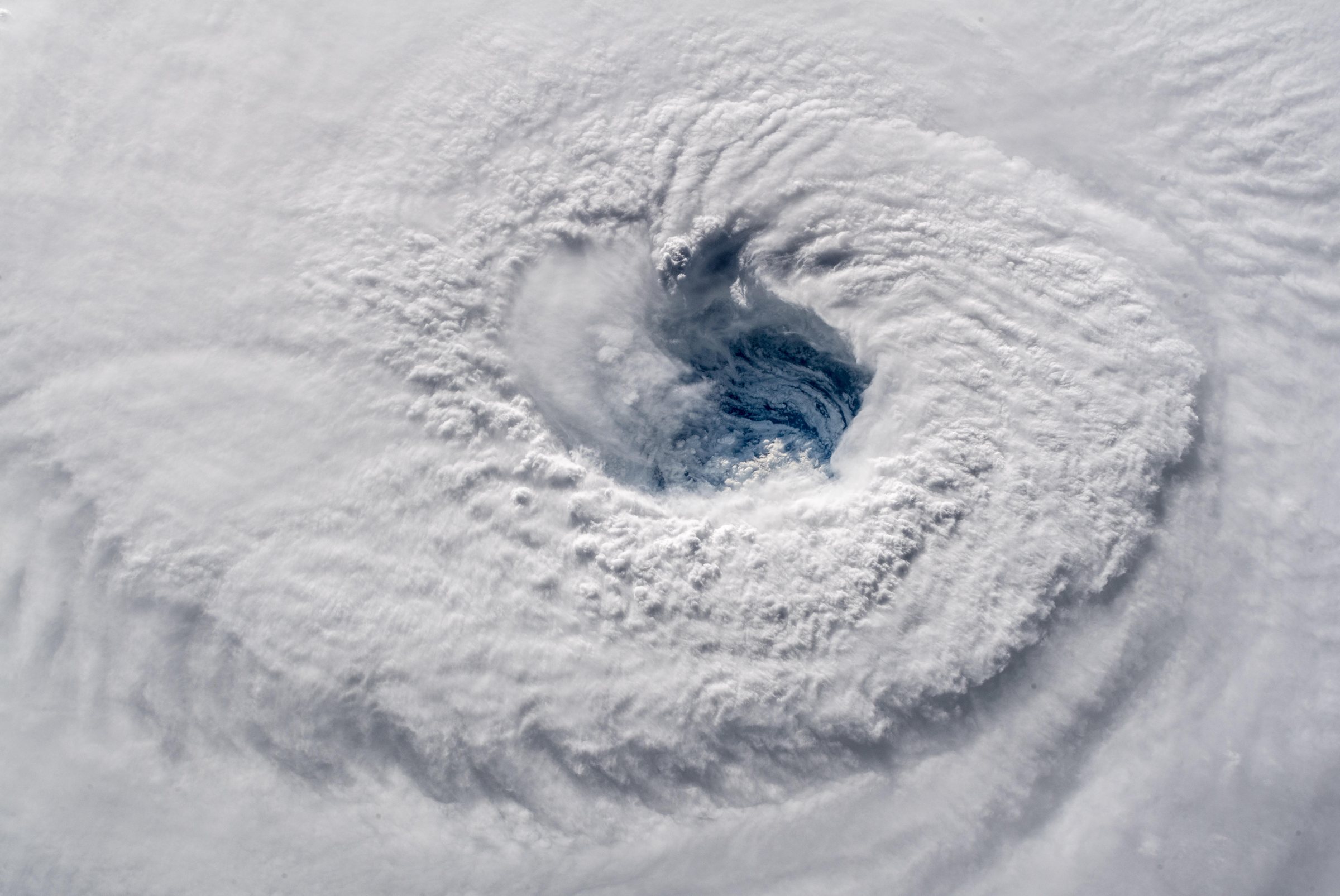
Category ≠ danger
Hurricane categories, explained in plain English
The Saffir-Simpson scale sorts every hurricane into one of five categories based on wind speed — and that's all it measures. Judging a storm's danger by its category number alone is one of the most common (and dangerous) mistakes people make. Here's what the categories actually mean, and what to watch instead.
The basics
What the scale actually measures
The Saffir-Simpson Hurricane Wind Scale rates a hurricane from Category 1 to Category 5 based on one thing only: its peak sustained wind speed. That's it.
The category tells you nothing about the storm's rainfall, its storm surge, its physical size, or how fast it's moving — all of which matter just as much, and often more, for how dangerous a storm turns out to be where you live. A well-known Category 1 can flood a city; a compact Category 4 can miss most of a state entirely. The number is a wind measurement, not a danger score.
By the numbers
Category by category
- Category 1 — 74–95 mph. Roof shingles and siding damage, large tree branches snap and some trees topple, power outages that can last several days.
- Category 2 — 96–110 mph. Major roof and siding damage, many trees snapped or uprooted, near-total power loss that can take weeks to restore.
- Category 3 — 111–129 mph. This is the threshold for a "major hurricane." Devastating damage: well-built homes lose major roof structure or walls, and the area can be without water and power for weeks.
- Category 4 — 130–156 mph. Severe structural damage even to well-built homes, most trees and power poles down, the area can be uninhabitable for weeks to months.
- Category 5 — 157 mph or higher. Catastrophic damage — total roof failure and wall collapse in many framed homes, with long-term isolation from downed power and roads.
The trap
Category isn't danger
Here's the part that catches people out: most hurricane deaths come from water, not wind — storm surge along the coast and inland flooding from rainfall, not the wind speed that sets the category. A slow-moving storm that stalls over an area and dumps two or three feet of rain can be far deadlier than a fast-moving, higher-category storm that blows through and is gone by morning.
So a "lower category" storm is not automatically a "lower risk" storm. Downgrading your concern just because a storm dropped from a Category 3 to a Category 1 can be a serious mistake if it's slowing down and the rain forecast is climbing. Judge the real risk by surge and rain, not the headline number.
Look further
Beyond the category — what to actually watch
Once you know the category isn't the whole story, here's what to check instead:
- Storm size. A small, intense Category 4 can affect far less real estate than a huge Category 1 whose wind and rain field spans hundreds of miles.
- Forward speed. A slow-moving storm sits over an area longer, which usually means far more total rainfall and a longer flood threat — regardless of category.
- The separate surge and rainfall forecasts. The National Hurricane Center publishes storm-surge and rainfall forecasts independently from the category, and those are the products that actually predict flooding. See our guide to storm surge vs. flooding for how to read them.
- The forecast cone itself. The cone shows the probable track, not the size or strength of impacts — read our guide to the cone of uncertainty to understand what it does and doesn't tell you.
FAQ
Common questions
Does a higher category mean more people die?
Not necessarily. Category only measures wind speed. Most hurricane deaths come from water — storm surge and inland flooding — so a slow-moving "lower-category" storm that stalls and dumps heavy rain can be deadlier than a fast-moving higher-category storm that passes through quickly.
What counts as a "major" hurricane?
A "major hurricane" is Category 3 or higher — sustained winds of 111 mph or more. That threshold is where wind damage typically becomes devastating and widespread rather than just serious.
Does the category predict flooding risk?
No. Category is wind speed only. Flooding risk depends on storm surge, rainfall totals, and how slowly the storm moves — none of which the Saffir-Simpson scale accounts for. Check the separate surge and rainfall forecasts instead.
Where can I see a storm's current category?
HurriTrack's live tracker shows every active Atlantic storm's current category and wind speed pulled from NOAA / National Hurricane Center advisories, updated as new advisories are issued.
Next
Want to know if a storm is actually a threat to you? Read Will it hit me? How to read the forecast. For the flooding side of the risk, see storm surge vs. flooding. Or check current storms right now on the live hurricane tracker.
Sources
Every safety-critical and quantitative claim on this page is drawn from these primary sources. Guidance can change — follow your local emergency management for decisions where you are.
- Saffir-Simpson Hurricane Wind Scale — NOAA / National Hurricane Center. https://www.nhc.noaa.gov/aboutsshws.php
- NHC Glossary of Terms — NOAA / National Hurricane Center. https://www.nhc.noaa.gov/aboutgloss.shtml
- Hurricane Safety — NOAA / National Weather Service. https://www.weather.gov/safety/hurricane
- Hurricanes — Ready.gov / FEMA. https://www.ready.gov/hurricanes
HurriTrack is an independent guide for general awareness and is not an official source. For any safety decision, follow NHC and your local emergency management.