
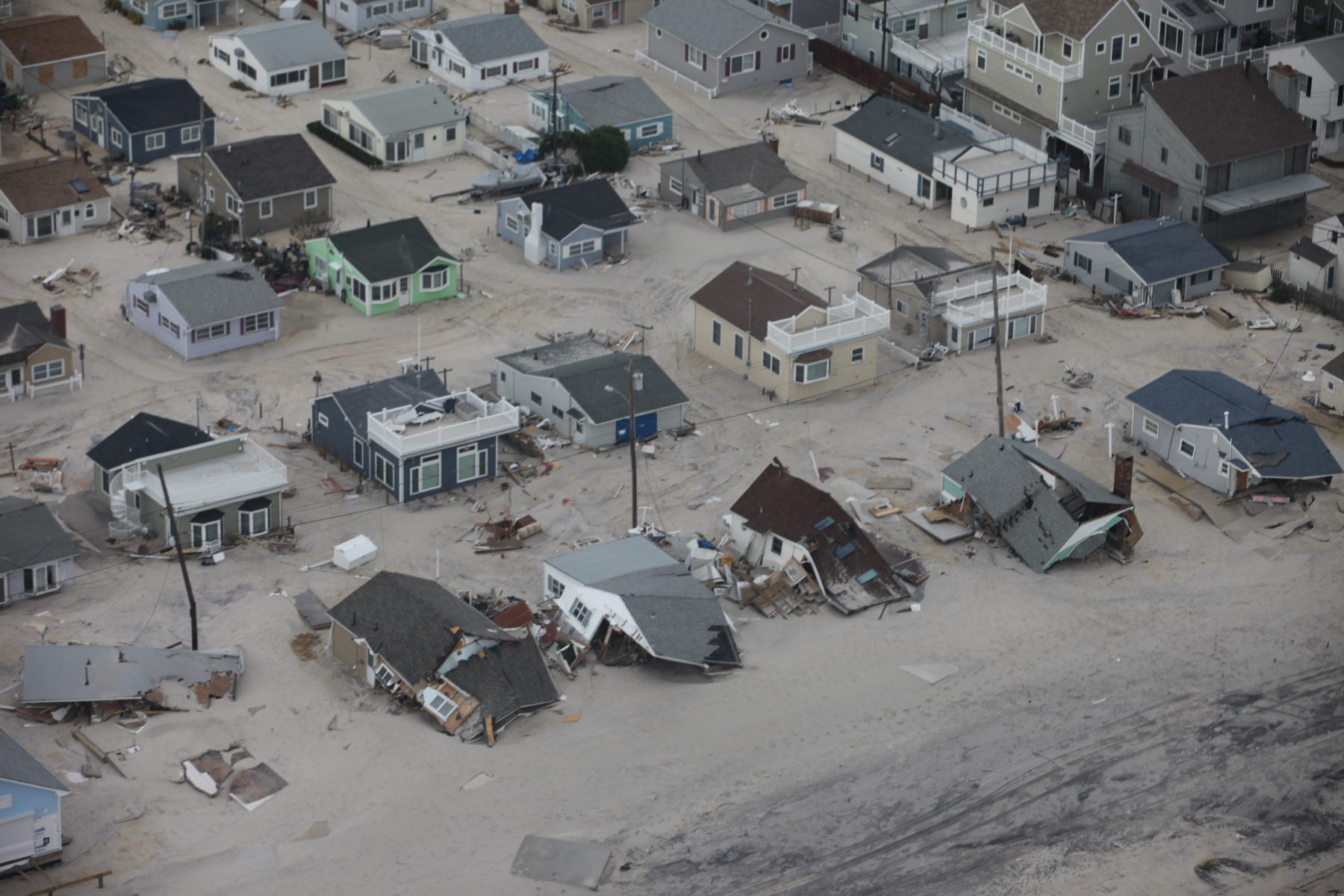
Water, not wind
Storm surge vs. flooding: what's the difference?
Both are the deadliest parts of a hurricane, but they're different hazards, with different causes, that hit different places. Here's the plain-English breakdown of each.
Hazard 1
Storm surge: the ocean pushed ashore
Storm surge is the wind-driven rise of sea level at the coast as a hurricane approaches and makes landfall. The storm's winds physically push a dome of ocean water toward shore, and when that water has nowhere to go, it piles up over normally dry land — sometimes reaching many feet above the usual tide line in a major storm.
Surge arrives fast and is most dangerous right at and near landfall, which is what makes it so deadly: there's often only a short window to get out of its path. It's also very local. Because it depends on the shape of the coastline and how high the ground sits, two neighborhoods a mile apart can face very different surge risk from the same storm.
That's why local emergency management maps and publishes storm-surge evacuation zones — often lettered A, B, C and so on. Those zones are about elevation and coastal exposure, not about the hurricane's wind category. A "weaker" storm on the wind scale can still push a dangerous surge if it's large or approaches at the wrong angle, so never assume the category tells you your surge risk.
Hazard 2
Inland flooding: the rain that doesn't stop
Inland flooding is a completely different mechanism: it's caused by heavy, sustained rainfall, not by ocean water. When a tropical system slows down, stalls, or lingers over an area, it can drop enormous amounts of rain in one place over many hours or days. Rivers rise, storm drains back up, and low-lying ground floods — sometimes with very little warning.
Because rainfall flooding isn't tied to the coastline, it can happen far inland, hundreds of miles from where the storm made landfall. It can also arrive well after the initial event: a system can keep dumping rain for days after landfall, and it doesn't need to still be a hurricane to do it — a storm that has weakened to a tropical storm or even a tropical depression can produce serious, sometimes worse, flooding as it moves inland and slows down.
Why it matters
Why the difference matters for you
If you live on or near the coast, knowing your county's general risk level isn't enough — you need to know your specific storm-surge evacuation zone. That zone, not the forecast wind category, is what should drive your evacuation decision when an order comes.
If you live inland, don't stop paying attention once a storm's winds drop or it moves away from the coast. Freshwater flooding from rainfall is one of the leading causes of hurricane-related deaths in the United States — a separate toll from the deaths caused by wind or by surge — and it can hit places that never experienced surge, wind damage, or even a hurricane warning at all.
Take action
How to check your own risk
- Storm-surge evacuation zone. Look up your address on your county or state emergency-management site to find your specific surge zone — this is what to follow for evacuation decisions, not the hurricane's category.
- Base flood risk. Check FEMA flood maps for your address to understand your general flood exposure, insurance needs, and whether you're in a designated floodplain.
- River and flash-flood forecasts. Once a system is anywhere near you, start watching National Weather Service river and flash-flood forecasts — they update as rainfall totals become clearer, often faster than the storm track itself changes.
For the rest of your preparations, see the hurricane prep checklist, and if you're trying to make sense of a storm's strength, read hurricane categories explained.
FAQ
Common questions
Which is more dangerous, storm surge or wind?
Historically, water — not wind — is responsible for most hurricane deaths, and storm surge and inland flooding are the two biggest pieces of that. Surge is the more sudden, concentrated killer right at the coast during landfall; flooding kills more quietly, over a wider area, sometimes days after the storm has passed.
Can I be at flood risk even if I live far from the coast?
Yes. Inland flooding comes from rainfall, not ocean water, so it can happen hundreds of miles from where a storm made landfall — anywhere the remnants stall out and dump heavy rain on rivers and low-lying ground.
How do I find my storm-surge evacuation zone?
Search your county or state emergency-management site for an evacuation zone lookup and enter your address. Surge zones are based on elevation and coastal exposure, not on the storm's wind category, so they need to be checked separately.
Does a downgraded tropical storm or depression still cause flooding?
Yes, often more so. Once a system loses wind speed it can actually slow down and drop even more rain in one place, so the flood risk frequently continues — or increases — after a storm is downgraded.
Next
Get ahead of both hazards with the hurricane prep checklist. If a storm is active and you're not sure how worried to be, read Will it hit me? And to understand what a storm's category does (and doesn't) tell you about your risk, see hurricane categories explained.
Sources
Every safety-critical and quantitative claim on this page is drawn from these primary sources. Guidance can change — follow your local emergency management for decisions where you are.
- Storm Surge Overview — NOAA / National Hurricane Center. https://www.nhc.noaa.gov/surge/
- Potential Storm Surge Flooding Map — NOAA / National Hurricane Center. https://www.nhc.noaa.gov/surge/inundation/
- Flood Safety — NOAA / National Weather Service. https://www.weather.gov/safety/flood
- Floods — Ready.gov / FEMA. https://www.ready.gov/floods
HurriTrack is an independent guide for general awareness and is not an official source. For any safety decision, follow NHC and your local emergency management.